Ketamine
Does Ketamine Therapy Get You High
Feb
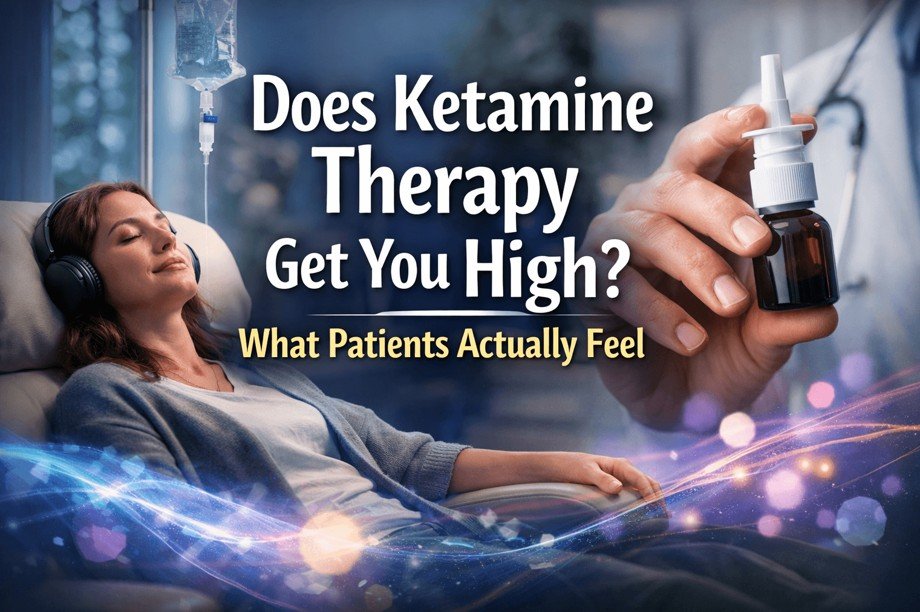
Does Ketamine Therapy Get You High
Does Ketamine Therapy Get You High, Ketamine has long been used as a recreational drug and as an anesthetic in some circles. When people learn about its use in medical settings, their preconceived notions about it as a “party drug” frequently cause them to worry. Does ketamine therapy result in euphoria? The answer is complex and relies on the situation and the way the medication is used.
Does Ketamine Therapy Get You High | Recreational vs. Therapeutic Use
- Recreational Use: Ketamine can cause severe dissociation, euphoria, and hallucinations at large doses; these effects are frequently referred to as a “high.” These can be dangerous and uncontrollable sensations.
- Therapeutic Use: Under medical supervision, ketamine is used at sub-anesthetic dosages in clinical settings. Instead of pursuing bliss, the objective is to induce a controlled dissociative state that aids patients in gaining psychological understanding and distancing themselves from harmful thought patterns.
Does Ketamine Therapy Get You High | What Patients Usually Go Through
- Dissociation: A feeling of separation from one’s body or surroundings, frequently referred to as “observing oneself.”
- Changes in thinking processes, time perception, or sensory awareness are examples of altered perception.
- Calm and Clarity: Following sessions, a lot of patients say they feel lighter or more transparent.
- No Chaotic High: The experience is controlled, safe, and supervised by experts, in contrast to recreational use.
The Significance of This for Therapy
The quick antidepressant impact of ketamine is thought to be influenced by its psychedelic properties. Ketamine can help “reset” neuronal pathways by momentarily changing brain activity, providing relief for disorders like depression that are resistant to treatment. The goal of the dissociative state is to create a healing window rather than to escape.
In conclusion,
A recreational “high” is not produced by ketamine therapy. Rather, it creates a regulated dissociative state that aids in psychological recovery. The experience is tightly controlled to guarantee safety and therapeutic benefit, even if patients may feel changed during therapy. It’s important to distinguish between medicinal and recreational use; the former aims for transformation, while the latter seeks escape.
