GUIDE TO DOSING MUSHROOMS
Against the backdrop of a North American medical system facing challenges and the alarming surge in depression and anxiety rates (a trend that’s been escalating, reaching 29.0%, nearly 10 percentage points higher than in 2015), a curious shift is emerging among young adults. As the modern pillars of healthcare often fall short, many are seeking relief in the ancient wisdom of our ancestors. For millennia, certain natural aids like cannabis and psychedelic mushrooms have been cherished for their therapeutic potential, providing both physical and mental relief to societies of old.
Today, young adults, in their quest for genuine healing, are revisiting these age-old remedies. Their hope? That the same fungi which sustained and healed our predecessors can offer a beacon of hope and relief in our contemporary, often tumultuous, world. This guide to dosing serves as an exploration into the realm of these potent fungi, aiming to demystify their use and potential in the modern era.
FACTORS THAT MAY AFFECT YOUR PSYCHEDELIC EXPERIENCE
Your psychedelic journey is deeply personal and can be influenced by a variety of factors:
1. Mushroom Potency:
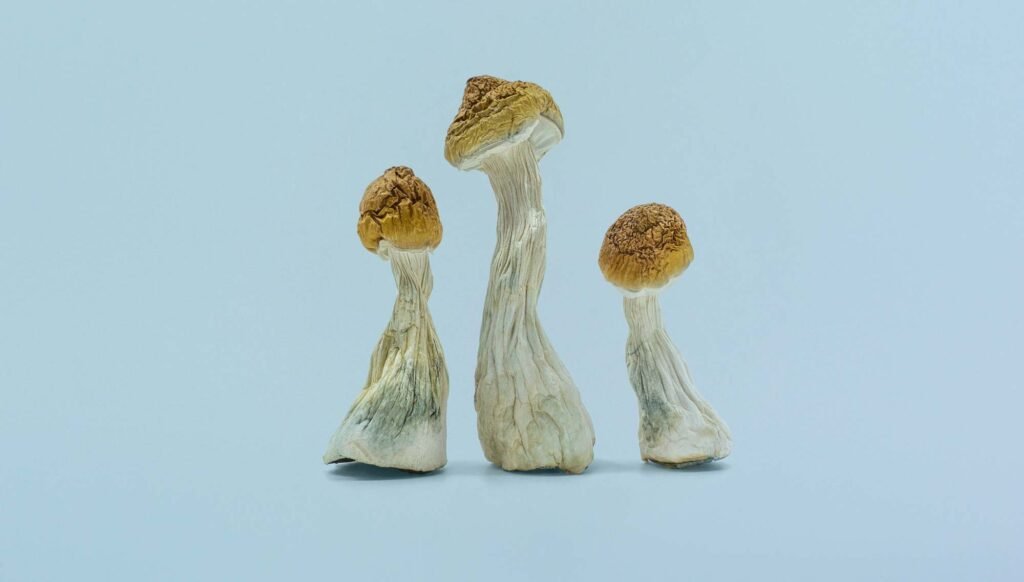
Different species of psilocybin mushrooms have distinctly different psilocybin levels. For those seeking milder experiences, our B+ and Golden Teachers are ideal choices due to their lower potency. If you’re looking to venture further, consider our Hawaiian (PES Hawaiian) variant for a euphoric body buzz or the Huautla for introspective reflections. Newcomers should exercise caution with stronger strains from the Penis Envy family, Avery Albino, and PESA.
2. Mushroom Anatomy:
Specific portions of the mushroom exhibit higher potency. A 2003 Japanese study on six cubensis samples revealed the caps to be more potent than the stems. To be precise, the study discovered psilocin/psilocybin content levels in caps ranging between 0.17–0.78%/0.44–1.35%, whereas the stems stood at 0.09–0.30%/0.05–1.27%.
3. Growing Conditions:
The environment where the mushrooms flourish plays a pivotal role in their potency. A comprehensive study demonstrated that psilocybin levels could fluctuate, spanning from a mere 0.1% in some species to a substantial 2% in others.
4. Personal Biology & Mindset:
Each individual’s unique physiology and psychological makeup can shape their psychedelic experience. For instance, if you’re prone to dissociation, your trip might feel subdued compared to others. However, this doesn’t negate the therapeutic potential of psychedelics for you. For a deeper dive into how dissociation might influence your experience, consider an article titled “Why MDMA and Other Psychedelic Therapies May Not Work for You.